Business Wallets: A Milestone Towards Improved Competitiveness in Europe
European businesses repeatedly verify their identity and submit the same documentation every time they operate in a new Member State or with a new counterpart. KYB (Know Your Business) verification processes that drag on between 30 and 50 days, duplicated forms, and paper certificates are hampering cross-border expansion in a market that aspires to function as a single space.
The European Commission has responded to this fragmentation with the proposed Regulation COM(2025) 838, published on 19 November 2025. This regulation establishes European Business Wallets as a digital identity tool for legal entities, with recognition across all 27 Member States.
The Commission itself estimates annual savings of up to €160 billion for European businesses once these business wallets are fully adopted.
What Is a Business Wallet and Why Is It Vital for the Digital Single Market?
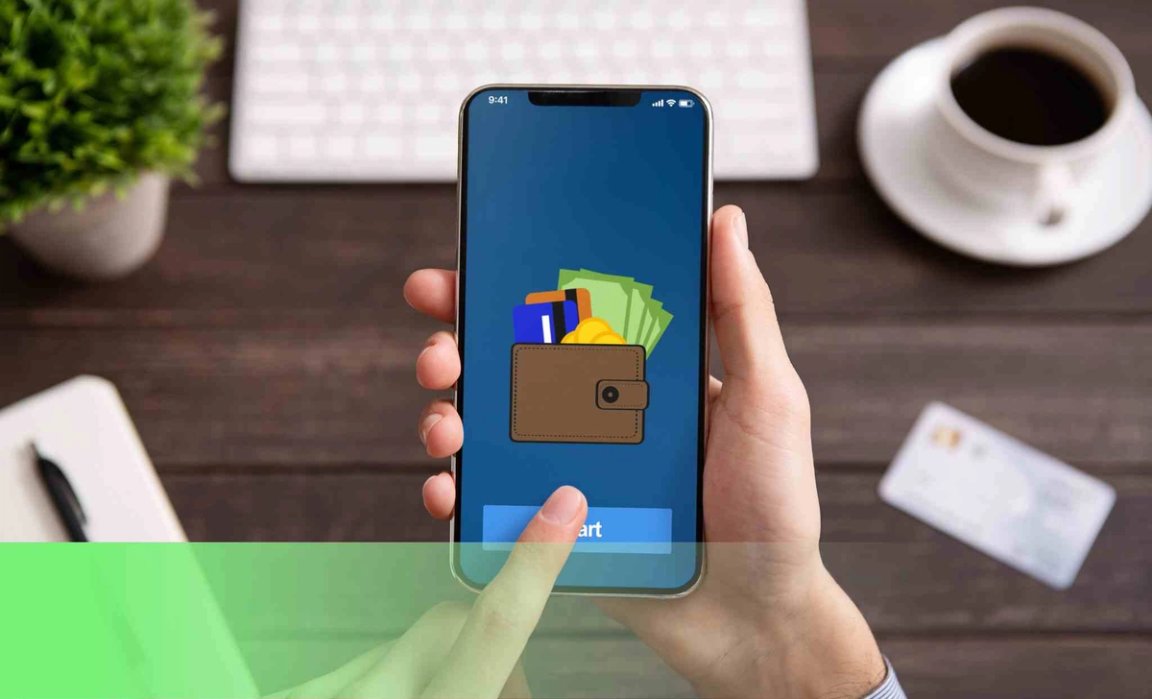
The European Business Wallet is a digital wallet that allows each company to have a unique, verifiable legal identity across the EU, together with certified attributes such as registration data, licences, or powers of representation, managed in a secure environment harmonised between Member States.
This wallet functions as a layer for managing verifiable credentials, fed by authentic sources such as commercial registers, tax authorities, and qualified trust service providers. The attestations issued by these sources guarantee the veracity of each piece of shared data, as established by the proposed Regulation COM(2025) 838.
Its architecture is based on the same model as the EUDI Wallet for natural persons, described in the Architecture and Reference Framework. Sole traders and self-employed individuals will be able to use their personal EUDI Wallet to access business services, whilst companies will have a dedicated Business Wallet.
The Business Wallet eliminates process duplication by offering a unique digital identity with cross-border recognition. It functions as a standard interface for interacting with major European systems such as BRIS (Business Registers Interconnection System), BORIS (Beneficial Ownership Registers Interconnection System), and ViDA (VAT in the Digital Age). Blockchain technology reinforces this ecosystem by providing immutability and traceability in credential verification.

Strategic Advantages of the Business Wallet for Your Business
The Business Wallet allows companies to store and reuse previously verified documentation, such as articles of association, licences, tax certificates, and powers of representation. Each credential can be shared with different counterparts and authorities without repeating the validation process, thereby reducing administrative costs and processing times.
In sectors such as financial services or insurance, where KYC (Know Your Customer) and KYB processes can drag on for weeks, automation through verifiable credentials substantially reduces identity and representation verification times.
For SMEs and scale-ups, the wallet opens a direct route to cross-border expansion. Opening branches, tendering for public contracts, or entering into agreements in other Member States with a recognised corporate identity reduces barriers to market entry. This functionality aligns with the Company Law Directive and with the ViDA initiative on digital VAT.
The wallet incorporates qualified electronic signatures and seals with full legal effect across the EU, an advancement aligned with the key aspects of the new eIDAS2 regulation for businesses. Credentials issued by commercial registers and sectoral regulators carry enhanced probative value, increasing legal certainty in every transaction.
Real-World Use Cases for the Business Wallet in Daily Operations
The Business Wallet makes it possible to automate verifications that today depend on PDF exchanges via e-mail or disparate national portals. Its application spans relations with public authorities, business-to-business operations, and the internal management of powers and mandates, with immediate effects on operational efficiency.
In the B2G (business-to-government) sphere, companies will be able to use the wallet as a standard channel for commercial registration, submission of tax declarations, and participation in public procurement of innovation processes. Credentials issued by competent authorities replace the repeated submission of certificates in each procedure.
In B2B relations, customer and supplier onboarding is streamlined through an efficient and secure KYC process for organisations, with instant verification of identity, registered address, licences, and powers of representation. Companies sign cross-border contracts and exchange ESG compliance certificates in supply chains with pan-European credentials.
The wallet also enables the granular delegation of signing authority on behalf of the company, with defined limits by amount or geographical scope. The complete authorisation cycle is managed with immediate effects on the operational capacity of each representative.
The European WE BUILD project, endowed with €25 million and 198 partners from 24 countries, is already piloting 13 use cases that integrate business wallets into daily operations.
Implementation Challenges in Security, Interoperability, and Adoption
The effective deployment of Business Wallets is advancing in parallel with the European legislative process. Its timeline and scope depend on cybersecurity certification as well as technical and semantic interoperability between Member States, in addition to adoption by businesses and public administrations.
ENISA (the EU Agency for Cybersecurity) is developing a specific certification scheme for EUDI Wallets covering private key protection, malware resistance, and programming interface security. The debate on the level of hardware certification requirements remains open amongst industry stakeholders.
Interoperability requires common standards for verifiable credentials, data formats, and exchange protocols, set out in the implementing acts and the Architecture and Reference Framework. On the semantic level, it is advisable to harmonise business attribute catalogues so that concepts such as “director” or “authorised signatory” are interpreted consistently across the EU. Blockchain traceability applications provide an immutable record of each credential exchange.
Companies will be able to use the Business Wallet on a voluntary basis, but public administrations will be required to accept it as a channel for identification, signing, and communication. The planned timeline points to adoption of the Regulation in the first quarter of 2026, with mandatory use for public administrations in 2027 and for regulated sectors in 2028.

ISBE, the Infrastructure Driving the Business Wallet in Spain
The Blockchain Services Infrastructure of Spain (ISBE) offers a shared space for issuing and verifying business credentials in Spain, with integrated regulatory compliance and European interoperability. ISBE acts as a trust layer for Business Wallets issued or used within Spanish territory.
ISBE is a public-permissioned infrastructure promoted by the Community of Madrid and the Alastria Network Consortium, funded with Next Generation EU funds. Built on Hyperledger Besu — the same technology used by the European infrastructure EBSI (European Blockchain Services Infrastructure) — it guarantees technical interoperability with the European digital identity ecosystem.
ISBE incorporates GDPR and eIDAS2 compliance by design, both at the technical and governance levels. The requirements of other regulations such as MiCA, DORA, the Data Act, LSMV, ENS, and NIS2 have been integrated into the design, facilitating adaptation to legal and technological developments.
Decentralised governance ensures that no single entity has unilateral control over the networks, generating trust for businesses and public administrations that need to issue or verify business credentials with legal validity. ISBE also enables the development of traceability and document certification use cases, along with automation through smart contracts, which complement the functionality of the Business Wallet and reinforce the competitiveness of Spanish businesses in the Digital Single Market.
Does your company need to verify its identity and share credentials with legal validity across different European markets?
Discover ISBE, the digital trust infrastructure that already makes it possible to issue and verify business credentials with integrated regulatory compliance and interoperability with the European ecosystem.
Frequently Asked Questions about Business Wallets
Who can be the “holder” of a Business Wallet within a complex organisation?
The legal holder is the legal entity itself, identified by its EUID (European Unique Identifier) or other official identifiers. The proposed Regulation incorporates a system of mandates and delegation of powers that allows different roles to be assigned to natural persons identified through their personal EUDI Wallets, with authorities delimited by scope and extent.
Is the Business Wallet compatible with current ERP systems such as SAP or Microsoft Dynamics?
Compatibility with ERP systems has been considered from the outset: the Business Wallet architecture incorporates standardised interfaces and APIs so that both ERPs and CRMs can request and verify credentials. Integrated corporate identity solutions already exist in SAP environments for regulated sectors. The main integration challenges are organisational, such as the mapping of existing processes and the updating of internal controls.
What happens if the company changes its director or is dissolved?
A change of director is reflected in the revocation of the representation credentials, with immediate loss of the capacity for digital signing on behalf of the company. In the event of dissolution, the wallet is revoked or closed after completing pending matters. The Regulation provides for specific mechanisms for managing the wallet lifecycle.
Will there be any cost for businesses to use the official EU Business Wallet?
The use of the official EU Business Wallet may be free of charge or at minimal cost, by analogy with the EUDI Wallet for citizens, which Member States must offer free of charge. At least one reference Business Wallet option will be available at no direct cost to businesses. Private providers will be able to offer value-added services under paid models.
How does the Business Wallet help combat business identity fraud?
The Business Wallet combats business identity fraud by using verifiable credentials issued by authentic sources with cryptographic verification, linking the company’s identity with the natural person acting on its behalf. It uses unique identifiers such as the EUID and the LEI (Legal Entity Identifier) to prevent impersonation. Its implementation coincides with the entry into force of the new AMLR Regulation against money laundering.

Redacción ISBE
Redacción @ ISBE